The “Mulled Science” blog has been quiet for a while. Again. Over the past few years, I (the author) have explored new jobs, had major life changes, and supported loved ones through their own life journeys. I’ve even learned a new instrument or two! None of these things lent much energy for noodling around on the internet.
Meanwhile, I know that a few readers still have found their way here each day—from all around the world—to discover what I’ve posted in the past. Thank you for your curiosity and support!
Winter lends itself to reading, so I’m trying to do more of that after a bit of a dry spell. I’m back today to share a little bit about feeling my way along the edges of science over the past year, as summed up by a single book.
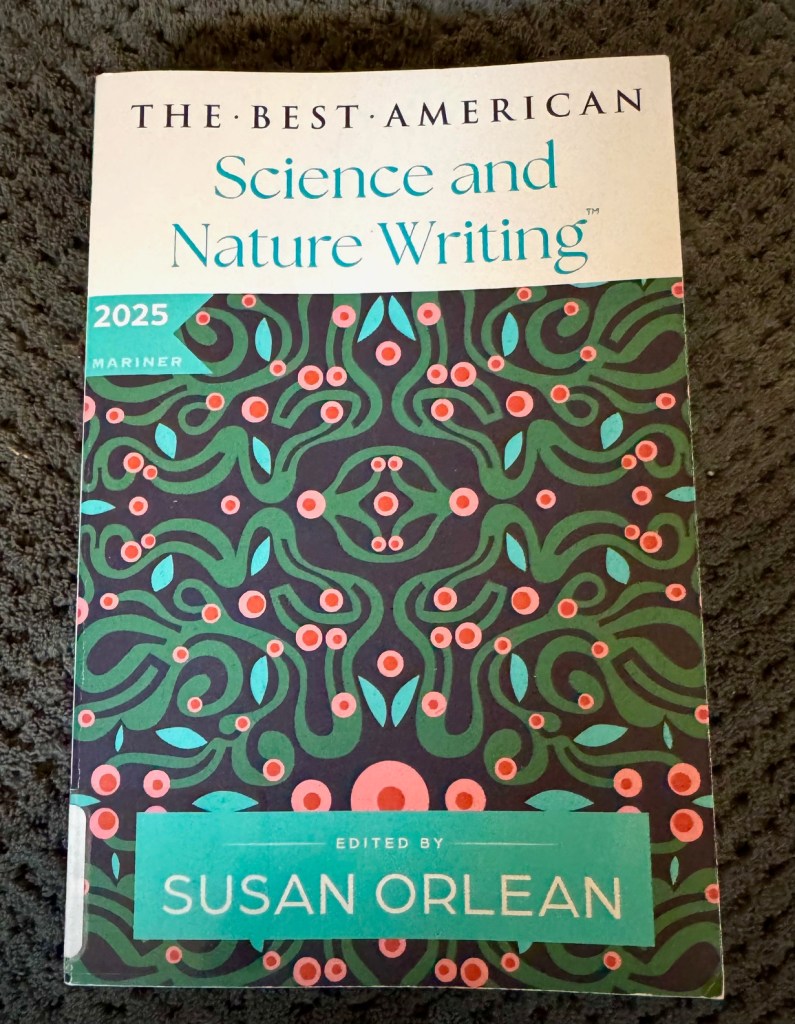
I just finished reading The Best American Science and Nature Writing 2025, edited by Susan Orlean. I discovered it on the new books shelf at my local public library. (Thank you, libraries!) This collection of 20 short articles and essays by various writers was easy to pick up and put down when I had just a few minutes here and there to dive into someone else’s insights.
I didn’t know how much I had missed this feeling.
As described in the foreword to the book by series editor Jaime Green, the works in this volume were all written prior to 2025. Importantly, this was before the start of the second term of the current U.S. president. 2025 brought a shake-up of science institutions and commitments in the U.S. that are interwoven into the fabric of our society. These changes have refocused most science dialog for the past year into important political conversations about science and society.
But I’ve missed reading about new scientific findings, and stories of people quietly exploring or protecting their corner of the universe. Maybe you have, too.
Anyway, back to the anthology. It’s great. You should read it.
Most of the pieces are about people, cultures, and ethical dilemmas. Some tell of ecological or technological nooks and crannies with careful detail and thoughtful prose. Many lament the state of where our choices and sometimes science itself have brought us. They often share hope for collective wisdom for the future.
Talented science writers help us see our world for what it is. They shine a light on new discoveries, and also when science has let us down. Science stories weave tales of people, the land and sea, other species and other worlds, identity, discovery, and sometimes uncomfortable truths.
Science and science communication work hand in hand. They draw from the expertise of people from all walks of life and all parts of the world. Together, we can seek to understand and respect the natural world around us, improve our own species’ wellbeing, and start dialogs that build compassion and connection. Let’s keep at it.
Thanks for reading. Although I’m not sure I’ll be able to post consistent blog content in 2026, I am sharing science tidbits when I come across them through my “Mulled Science” Facebook and Bluesky pages. Check them out for curated information from the news and other science communicators!
 Mulled Science